

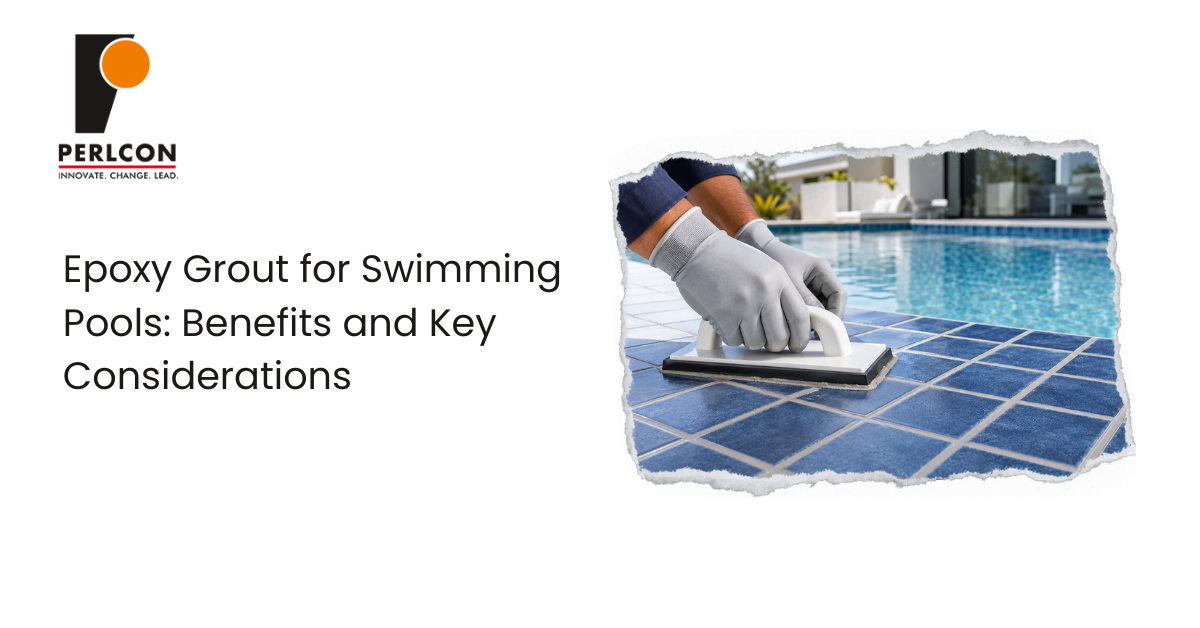
A swimming pool has to deal with water every single day. Add cleaning chemicals, changing temperatures, frequent foot traffic and regular maintenance, and the materials used around the pool have quite a lot to handle. Grout between the tiles is no exception.
Choosing the right epoxy grout can help create a stronger, cleaner, and more durable tiled surface while reducing some of the common problems associated with constant moisture exposure.
Why Does Pool Grout Matter?
Grout is more than just the material filling the gaps between tiles. It helps protect tile joints, supports the finished surface, and plays a role in keeping moisture from affecting the installation.
Traditional cement-based grout can absorb water and may become more difficult to maintain when exposed to constant moisture. For swimming pools, a grout with low water absorption and strong resistance to chemicals can be a more suitable choice.
Benefits of Epoxy Grout for Swimming Pools
1. Strong Water Resistance
Pool surfaces are continuously exposed to water, making moisture resistance essential. Epoxy grout forms a dense, non-porous joint that absorbs very little water. This makes it well suited to swimming pools and other wet areas.
2. Resistant to Pool Chemicals
Chlorine and other chemicals are necessary for maintaining pool hygiene, but repeated exposure can affect some conventional grouts. A good epoxy grout offers strong chemical resistance, helping the joints retain their performance and appearance over time.
3. Less Prone to Staining
Pool grout can collect dirt, mineral deposits, and other residues. Since epoxy grout has a non-porous surface, it is less likely to absorb stains. That means the tile joints can stay cleaner and look better with regular maintenance.
4. Durable and Long-Lasting
Swimming pools experience plenty of daily activity. Water movement, cleaning, temperature changes, and foot traffic all put stress on the tiled surface. Epoxy-based joints provide good resistance to cracking, abrasion, and general wear, making them a practical option for demanding environments.
5. Easier to Maintain
Nobody wants to spend hours scrubbing stained grout.
Its dense surface makes epoxy grout easier to clean compared with more porous alternatives. It is less likely to hold onto dirt and moisture, which can make routine pool maintenance simpler.
What Should You Consider Before Application?
Selecting the right product is only part of the job. Proper installation matters just as much.
The tile joints should be clean and free from dust, dirt, and residue before application. The components need to be mixed according to the manufacturer’s recommended ratio. Incorrect mixing can affect curing, strength, and the final finish.
Timing also matters. Epoxy-based grout can be less forgiving during application than conventional grout, so installers need to spread it correctly and remove excess material before it hardens.
Temperature, joint size, tile type, and the specific pool environment should also be considered before selecting a product. Following the manufacturer’s technical instructions can help ensure better performance and a cleaner final finish.
The Right Choice Can Prevent Future Problems
Pool renovations and repairs can be expensive, so choosing suitable materials from the beginning makes sense. A durable grout can help protect the joints, improve the appearance of the tiled surface, and reduce maintenance concerns over time.
Perlcon provides construction material solutions designed with performance, durability, and ease of application in mind. Its range of building materials supports a variety of construction and tiling requirements, helping professionals achieve dependable results.
For more information about Perlcon and its building material solutions!