

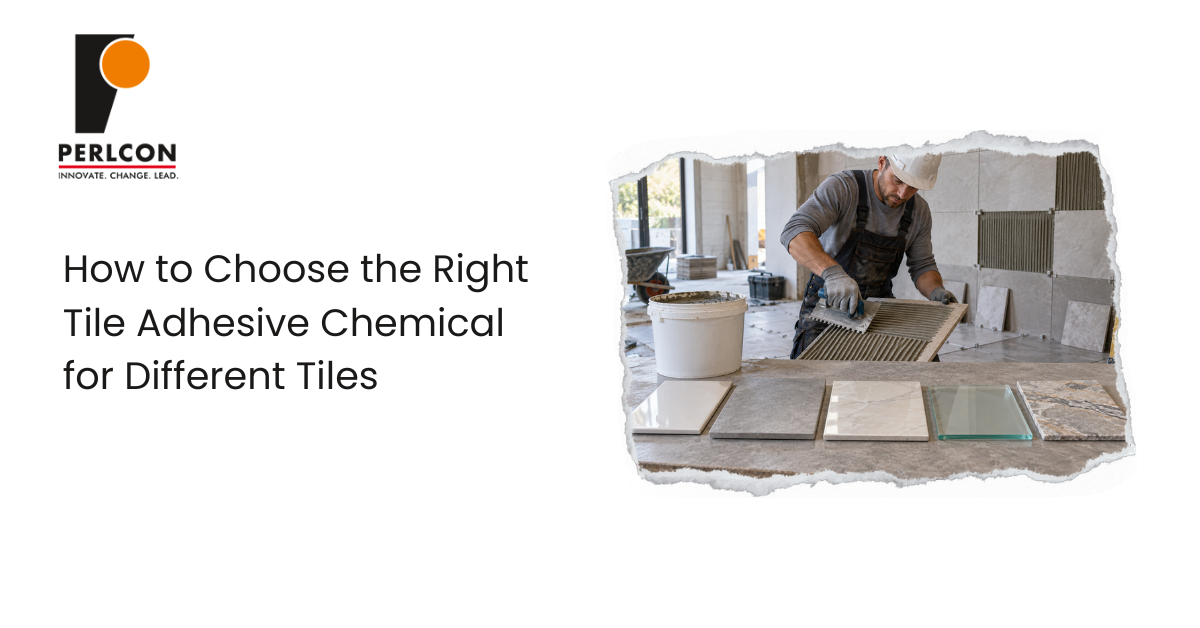
Choosing tiles is often the exciting part of a construction project, but the adhesive holding them in place deserves just as much attention. The right tile adhesive chemical helps provide proper bonding, stability, and durability, while the wrong one can lead to loose, cracked, or uneven tiles. Since different tiles have different properties and are used in different environments, choosing an adhesive should be based on the tile type, surface, location, and expected conditions.
Here’s How To Choose The Right Tile Adhesive Chemical For Different Types Of Tiles!
1) Start With The Tile Type
Not all tiles have the same surface, weight, or water absorption. Ceramic tiles generally have different requirements from porcelain, vitrified, glass, or natural stone tiles. Porcelain and vitrified tiles, for example, have low water absorption and often require an adhesive designed for strong bonding. Glass tiles may need specialized products that provide reliable adhesion without affecting their appearance. Always check whether the adhesive is recommended for the specific tile before making a choice.
2) Consider Where The Tiles Go
A tile adhesive suitable for an indoor wall may not be appropriate for an outdoor floor. Bathrooms, kitchens, balconies, terraces, swimming pools, and exterior walls can expose tiles to moisture, temperature changes, or heavier usage. Choose an adhesive according to the installation environment. For wet or outdoor areas, a product with suitable water and weather resistance is particularly important. The conditions surrounding the tiles can be just as important as the tiles themselves.
3) Check the Surface Carefully
The surface underneath the tile also influences adhesive selection. Concrete, cement-based screeds, plaster, plywood, and existing tiles can have different bonding requirements. The substrate should be sound, clean, dry, and free from dust, oil, or loose material before application. Some surfaces may require a compatible primer or specialized adhesive. Understanding the substrate helps ensure that the tile adhesive chemical can form a reliable bond instead of simply sticking temporarily.
4) Look For The Right Performance
Think beyond simply asking, “Will it stick?” A good adhesive should offer the performance needed for the particular installation. Depending on the application, you may need flexibility, water resistance, slip resistance, or stronger bonding capacity. Large-format and heavy tiles can require adhesives designed specifically for their size and weight. Following the manufacturer’s technical recommendations for coverage, mixing, application, and curing is equally important for achieving the expected performance.
5) Choose a Reliable Manufacturer
Quality matters when selecting construction chemicals because adhesive performance can directly affect the durability of a tiled surface. Look for products from an established building material manufacturer in India that provides clear technical specifications, application instructions, and product support. Certifications and compliance with relevant standards can also provide useful assurance. Instead of choosing solely on price, consider the product’s suitability, quality, performance, and compatibility with the complete tiling system.
In A Nutshell
While electing the right tile adhesive, remember that it is not a one-product-fits-all decision. The tile, surface, location, environmental conditions, and required performance should all be considered before making a choice. A suitable tile adhesive chemical can help create a strong and lasting installation, while proper surface preparation and application complete the process. When in doubt, consulting the manufacturer’s technical guidance can help ensure the adhesive matches the project.
Looking for better building materials? Explore Perlcon’s range of efficient construction solutions today!