

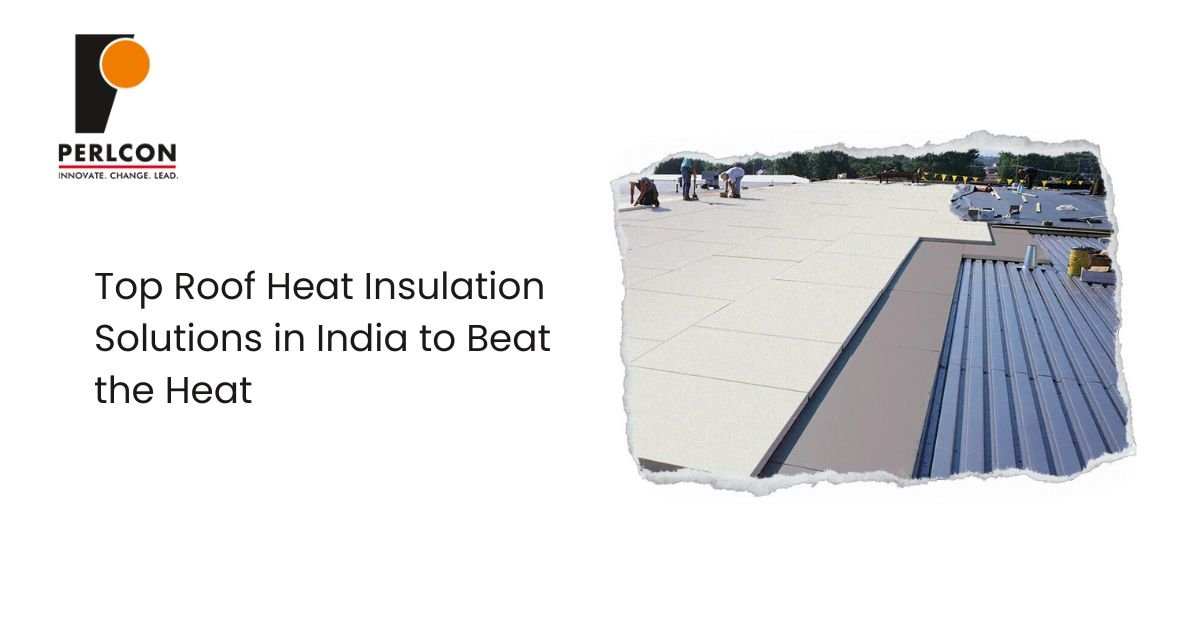
Summer heat in India can be brutal. Roofs face the worst of it every day. Heat enters buildings when there is no proper insulation. This makes living and working spaces very hot and uncomfortable.
The solution is simple. Good roof insulation stops heat from getting inside. It also helps save money on electricity bills. Your roof will last longer as well. The following are the primary insulation solutions that are effective in India.
Expanded Polystyrene (EPS) Boards
EPS boards are lightweight and cost-effective. They are simple to put in place. This is why many people in India choose them for insulation.
Both houses and office buildings use these boards successfully. They prevent the flow of heat to the roof. The boards are strong enough to handle the weight on top of them. People who want to save money find that EPS boards yield good results without incurring excessive costs.
Extruded Polystyrene (XPS) Boards
XPS boards are sturdier and more waterproof than EPS boards. They do well in areas with high moisture levels or rainy seasons.
Such boards are designed to resist the flow of water. This enables them to continue working for multiple years. They can also handle more weight pressing down on them. People use them on roofs where people walk or when the roof needs extra protection.
Polyurethane (PU) and Polyisocyanurate (PIR) Foam Sheets
PU and PIR foam sheets work very well, even when they are thin. They stop heat transfer better than most other materials.
These sheets close totally and do not allow any air to pass through them. They are ideal in case you do not have a lot of space to work with. Factories and large commercial buildings use them because they handle extremely hot weather very well.
Loose-Fill Insulation (Thermocol Beads, Vermiculite)
Loose-fill insulation works in spaces where flat boards won’t fit properly. It fills up odd shapes and uneven areas on roofs.
Workers pour materials like thermocol beads or vermiculite into empty spaces. This forms a layer that shields heat and can be used around corners and spaces. Old buildings often use this method when adding insulation later.
Reflective Foil Insulation
The principle of reflective foils is the reflection of heat back toward the sun. They stop heat from reaching the inside of buildings.
These foils don’t weigh much and are easy to install. They work even better when you use them with board insulation. Metal roofs, in particular, benefit greatly from this type of heat protection.
Green Roof and Vegetative Insulation
Green roofs utilize soil and plants instead of traditional insulation materials. They keep roofs cool while enhancing the appearance of buildings.
Plants and soil serve as a natural shield against heat. They also purify the air and favor green building techniques. Green roofs are initially more expensive to install, but they conserve energy and provide comfort for many years.
How to Choose the Right Roof Insulation?
The ideal insulation option will be determined by your local climate, the architecture of your building, and the correct installation.
- Hot and wet areas should use XPS boards with reflective foil together.
- High-performance PU or PIR foam is required in the factories and warehouses.
- Houses with unusual shapes can benefit from loose-fill options.
- Buildings focused on environmental impact should consider green roof systems.
Good installation makes all the difference. There should be tight joints, good sealing of the layers, and correct positioning of materials. This guarantees the insulation lasts many years.
Also Read: Use of Roof Insulation Materials In Construction
Conclusion
The insulation in the roof has become necessary because India is becoming hotter every year. EPS, XPS, PU/PIR, reflective foils, loose-fill, or green roofs would all be better choices when filling your space and making it more comfortable and energy-efficient.
At Perlcon, we offer the best quality roof heat insulation materials, designed to suit the Indian weather. Our products deliver performance, energy efficiency, and long-term comfort that you can trust.
FAQ’s
The best roof heat insulation materials for Indian homes in 2026 are XPS boards, PU/PIR foam sheets, EPS boards, and reflective foil insulation. For hot and humid climates, XPS combined with reflective foil gives the best performance. For budget-conscious homeowners, EPS boards are the most cost-effective option. Perlcon offers high-quality roof insulation materials designed specifically for Indian weather conditions.
Roof heat insulation in India costs approximately ₹300 to ₹900 per sq metre in 2026, depending on the material type and thickness. EPS boards are the most affordable option, while PU/PIR foam sheets cost more but offer superior thermal performance and long-term energy savings. Proper insulation can reduce indoor cooling load by 30–60%, making it a worthwhile investment.
EPS (Expanded Polystyrene) boards are lightweight, budget-friendly, and offer moderate thermal resistance ideal for residential roofs and new construction. XPS (Extruded Polystyrene) boards are denser, stronger, and more waterproof, making them better for high-moisture areas, walkable roofs, and rainy regions. For Indian climates with heavy monsoons or high humidity, XPS is the more durable long-term choice.
Yes, roof insulation significantly reduces indoor heat in India. Without insulation, roof surface temperatures can reach 60–70°C in summer, radiating heat inside. With proper insulation like XPS boards or PU/PIR foam sheets, indoor temperatures can drop by 10–20°C, reducing dependence on air conditioning and lowering electricity bills by up to 30–40% annually.
PU (Polyurethane) and PIR (Polyisocyanurate) foam sheets are the best roof insulation for factories and warehouses in India. They provide superior heat resistance even when thin, create a fully airtight seal, and handle extremely high temperatures — making them ideal for large commercial and industrial buildings. PIR foam also offers better fire resistance, which is essential for industrial safety compliance in 2026.