

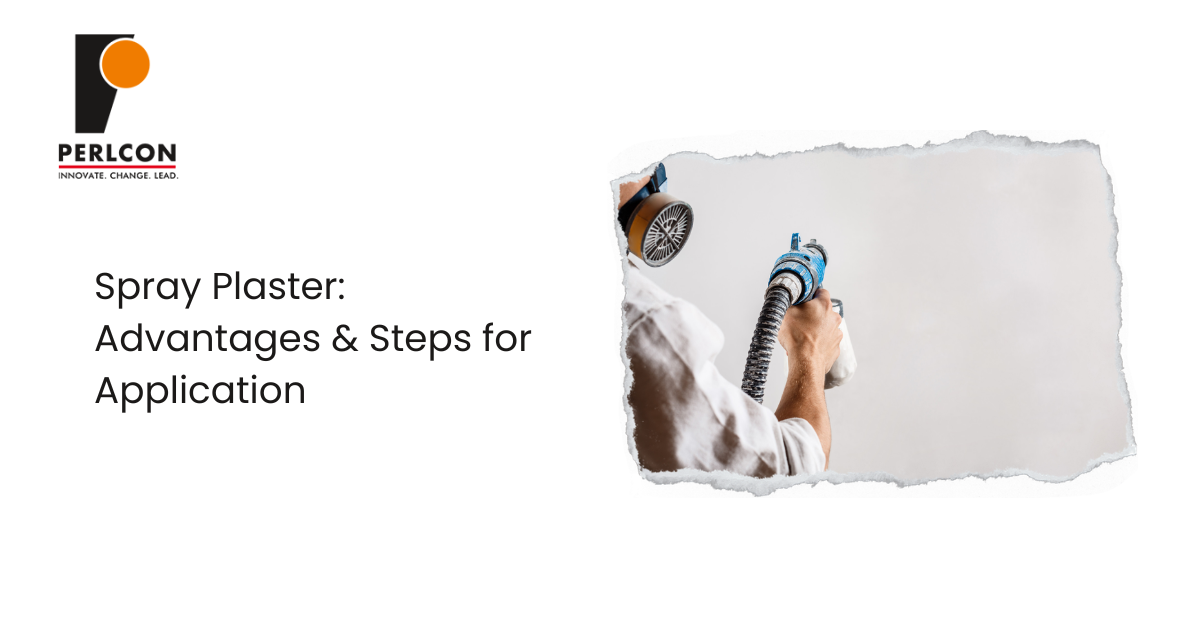
Construction sites are getting smarter and faster. One good example is the Spray Plaster Machine, a tool that has quietly changed the way plastering work gets done. Instead of the slow, manual process most people are used to, spray plastering uses a machine to apply plaster evenly across surfaces. The result? Faster work, smoother finishes, and far less effort.
Let’s break down how it works and why more builders are choosing it.
What Is Spray Plaster?
Spray plaster is a ready-to-use, polymer-modified plaster designed for both interior and exterior walls. Instead of mixing plaster manually and applying it with a trowel, the material is fed into a Spray Plaster Machine, which automatically mixes it with water and sprays it onto the wall surface.
The machine ensures consistent mixing and smooth application. That means better bonding, fewer cracks, and a finish that’s ready for paint or decorative coatings.
Spray plaster works well on brick walls, concrete surfaces, AAC blocks, ceilings, and even curved structures. So whether it’s a residential project or a large commercial site, the method adapts easily.
Advantages of Spray Plaster
Faster Application
Spray plastering can be 3 to 10 times faster than traditional methods. Large wall areas can be covered quickly, which helps speed up construction timelines.
Smooth and Consistent Finish
Because the machine mixes and sprays the plaster evenly, the final surface looks smoother and more uniform. There are fewer imperfections and better adhesion.
Works on Many Surfaces
Spray plaster can be applied to brick, concrete, AAC blocks, ceilings, and even complex architectural surfaces. That flexibility makes it suitable for many types of construction projects.
Minimal Material Waste
Traditional plastering often wastes material during mixing and application. Spray systems reduce this waste and even allow excess material to be reused. The rebound loss is almost zero.
Strong and Durable
Machine-applied plaster bonds tightly to the surface. This reduces problems like cracking, peeling, or shrinkage and creates a long-lasting finish.
Lower Labour Requirements
Since the machine handles mixing and spraying, fewer workers are needed. That reduces labour costs while still delivering consistent results.
Traditional Plastering vs Spray Plaster
Traditional plastering is familiar to most people. Workers mix cement plaster manually, carry it to the wall using a hawk, and smooth it out with a trowel. It works, but it takes time and requires skilled labour.
A Spray Plaster Machine simplifies this entire process. The plaster is automatically mixed inside the machine and sprayed directly onto the surface. This creates an even layer without the constant manual effort.
The difference becomes obvious on large projects where time and consistency matter.
For construction teams aiming for faster execution, cleaner finishes, and reduced labour dependency, spray plastering is becoming a practical solution. Many builders today rely on high-quality spray plaster materials and systems offered by trusted brands like Perlcon, known for advanced building materials designed for modern construction needs.